

Robotics research
ATFUTA is researching the systems required to connect artificial intelligence with perception, mobility, embedded control and human interaction.
A robot is a system, not a feature list.
Useful robotics requires multiple disciplines to work under the same physical constraints. A perception model cannot be separated from the sensors feeding it. A motion plan cannot ignore mechanics. An interaction model must communicate what the machine can and cannot do.
ATFUTA's current direction connects artificial intelligence, robotics, computer vision, autonomous mobility, embedded systems, sensors, cloud AI, software and human-robot interaction.
These are research domains and engineering directions. They are not claims of completed commercial capability.
Research across the complete machine.
Research becomes engineering when ideas are translated into physical behavior and tested against reality.
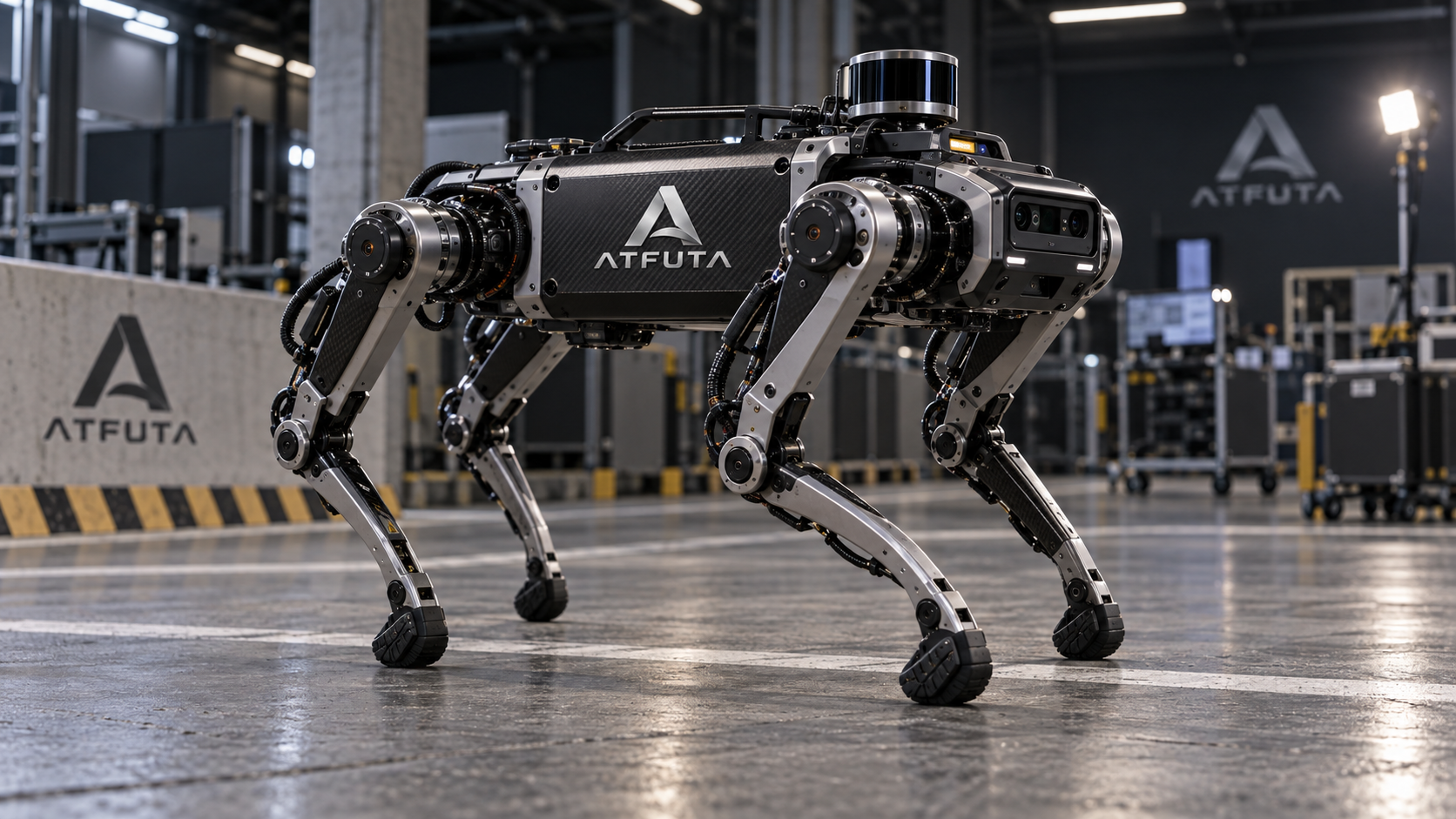
Research becomes engineering when ideas are translated into physical behavior and tested against reality.
Iterative, integrated and evidence-led.
Research identifies the problem and the constraints. Build turns assumptions into a prototype. Test reveals how the complete system behaves. Improve feeds that evidence into the next iteration.
This loop is especially important in physical AI because real environments expose relationships that are easy to miss in isolated software work: lighting changes, sensor noise, latency, mechanical limits and human expectations.
ATFUTA uses public language such as “in development” and “researching” until work is sufficiently verified to support a stronger statement.