
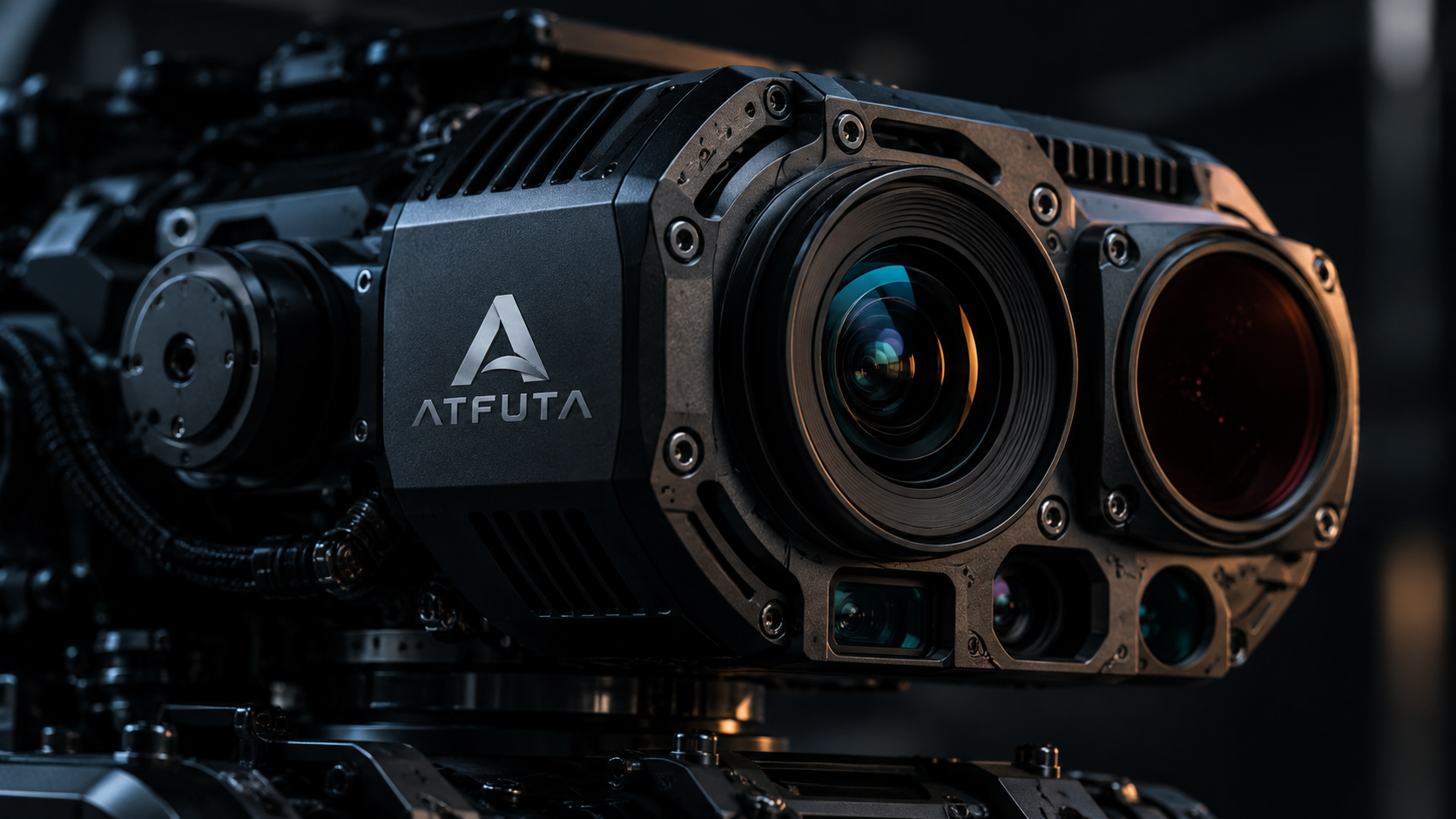
Physical AI
Intelligence becomes physical when a system can sense its environment, build context, choose a response and translate that decision into controlled action.
From information to interaction.
Artificial intelligence is often experienced through information: text, images, software and digital decisions. Physical AI extends that intelligence into systems that must operate under real-world constraints.
A physical system has to interpret incomplete sensor data, understand space, respond within useful time limits and act through hardware. Every decision meets mechanics, energy, uncertainty, people and the environment.
ATFUTA uses physical AI as an engineering framework for studying that complete loop—not as a claim that a finished autonomous product already exists.
Four connected stages.
The intelligence is not one model. It is the relationship between sensing, reasoning, control and the machine itself.
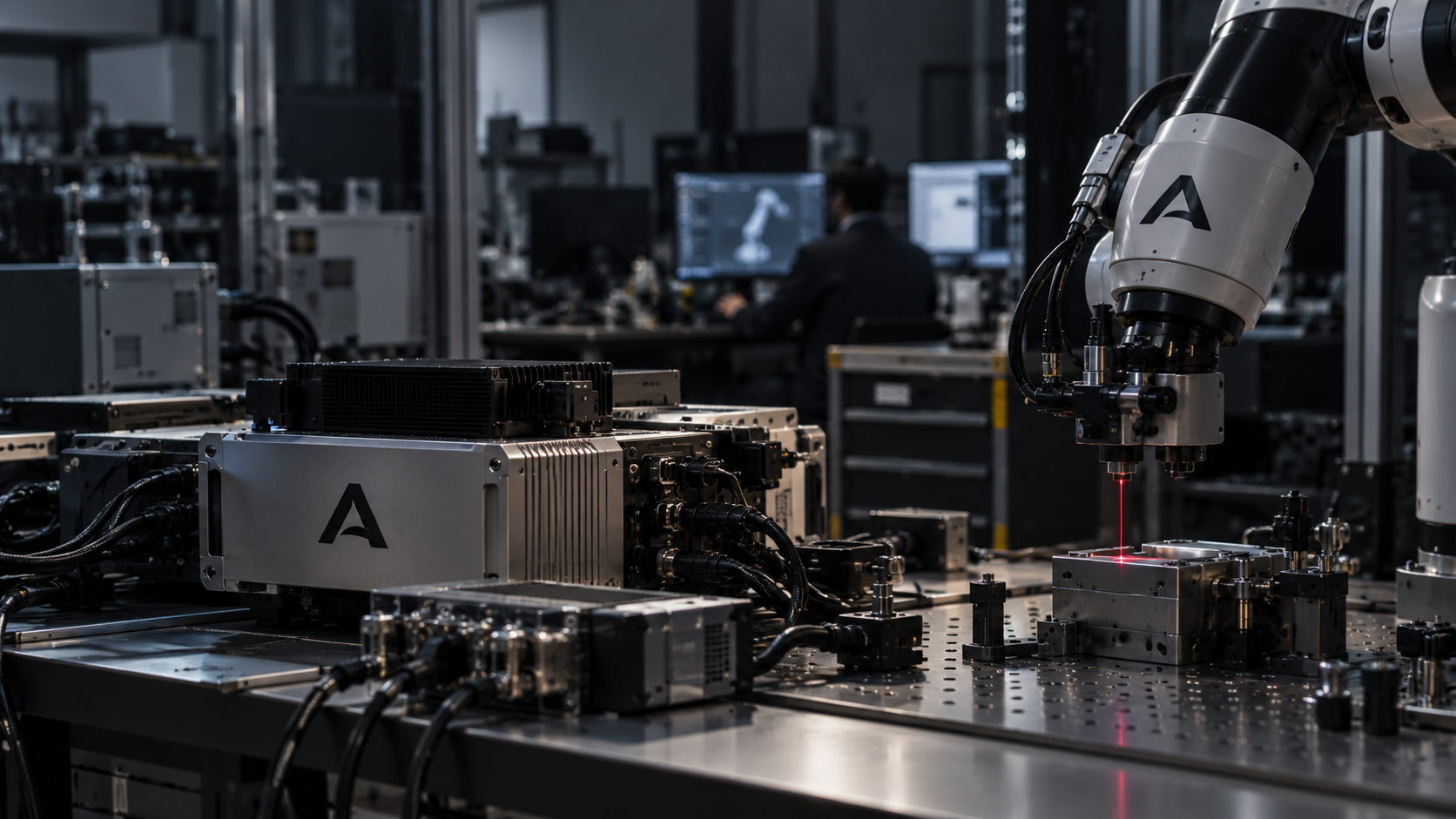
The intelligence is not one model. It is the relationship between sensing, reasoning, control and the machine itself.
Software and hardware must evolve together.
Computer vision helps a system observe geometry and change. Embedded compute brings inference and control closer to the machine. Mobility and actuation connect decisions to motion. Human-robot interaction makes system state and intent easier to understand.
Cloud AI may extend some forms of intelligence, while on-device systems remain important where latency, connectivity or operational boundaries matter. The correct balance depends on the task and remains an area of active research.
ATFUTA's work connects these disciplines through prototyping and system-level testing.